BELLSIX
A training clock I built for my own workouts, then kept building
The Idea
This started as a tool for me. I wanted a decent interval clock for my own training and the options were a $300 LED wall unit or an app that buried the timer three taps deep. So I built the clock I wanted, and then it turned into a place to practice the things I care about professionally: a token system driving two platforms, an engine that cannot drift, and an interface readable from across a room.
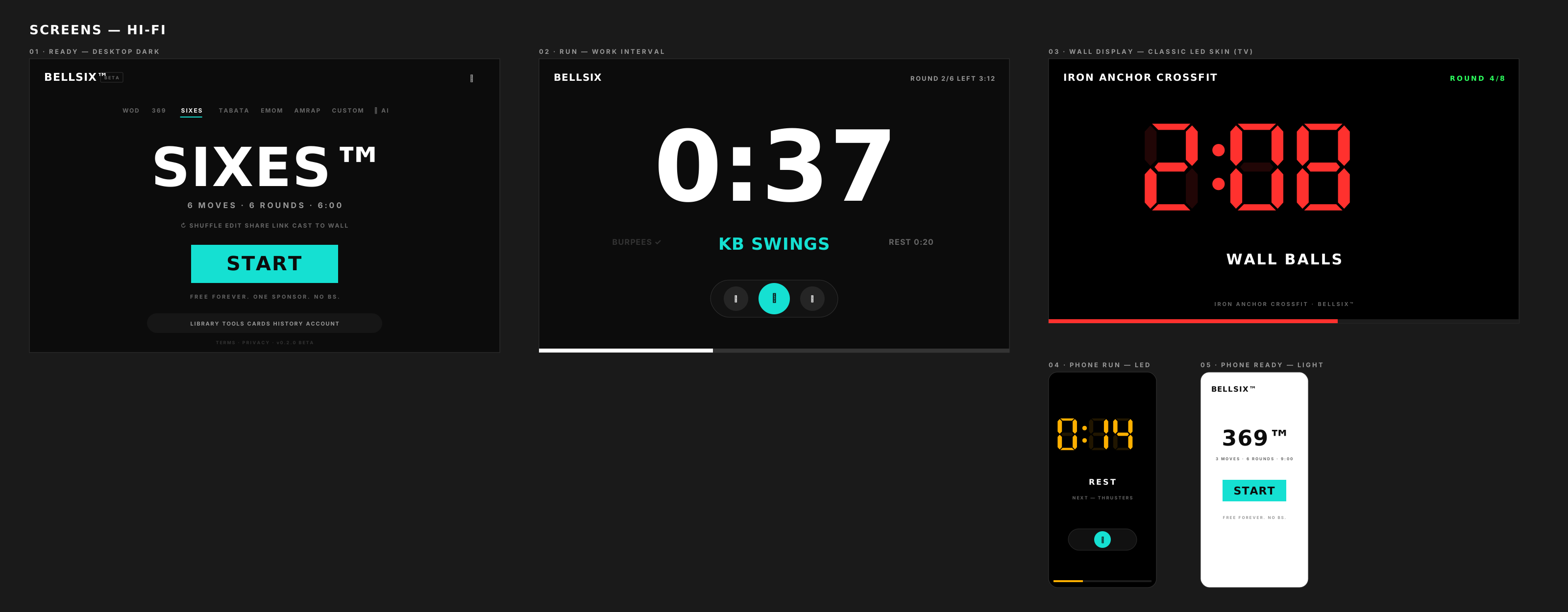
It runs on any screen a gym already owns, a TV, an iPad, an old phone, or a browser, controlled from a phone or watch. Live at bellsix.com, with native iPhone and Apple Watch apps sharing one timing engine so the clock behaves identically everywhere. It is free, and I am building it because it is fun.
Design & Brand
Dead simple, impossible to confuse with anyone else.
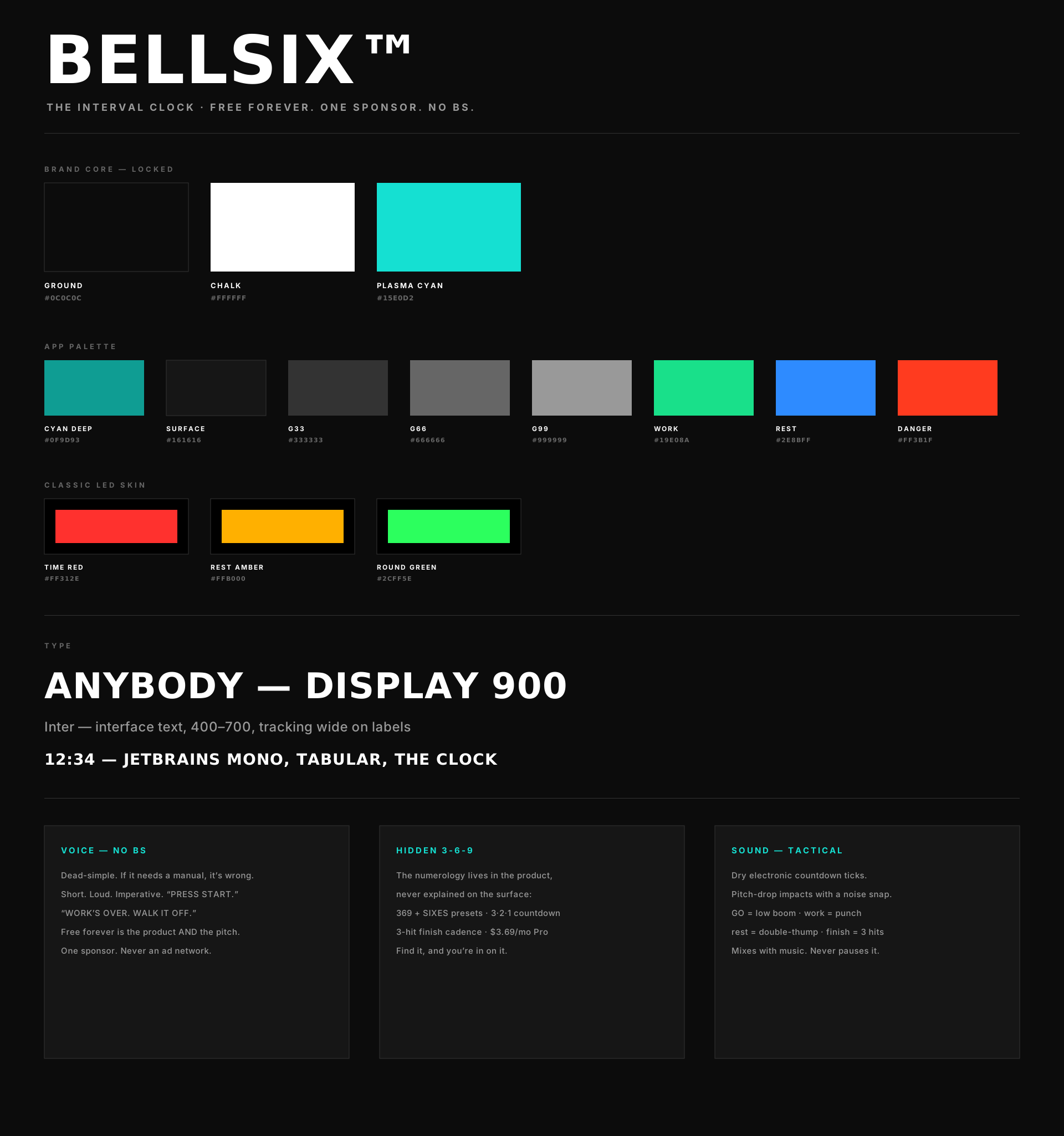
A deliberately brutalist system: black field, chalk-white type, a single electric accent used once per screen, and a condensed variable display face whose width-stretch is the motion identity. Voice is plain and direct. No BS.
A locked brand core plus an extended app palette. A hidden 3-6-9 numerology runs through the grays, timings, presets, and pricing, never explained on-site.
Tactical and military-inspired: dry countdown ticks and percussive pitch-drop impacts. No musical bells.
WCAG AA accessibility, reduced-motion support, and offline-first operation. A gym clock cannot fail because the wifi did.
What's Built
A drift-proof deadline timer engine sits under everything. On top of it: presets, a daily deterministic Workout of the Day with archive, a block-based custom builder, and an AI workout generator. Steps can be timed or rep-based, counting down or waiting for a tap on DONE.
Around the clock itself: result logging with benchmark PRs and a shareable result and trend card, a movement catalog with equipment- and injury-aware substitution, and Gym Control, which casts the clock across multiple screens and drives it from a phone or watch. Coach and box pages ship with a printable wall QR. Underneath all of it is a single design token system driving both web and native.
The Stack
Vite, React, and TypeScript on Vercel, with a single-source design-token pipeline feeding every surface.
Supabase: auth, Postgres with RLS, Realtime for Gym Control, and edge functions.
A shared Swift BellSixEngine package with SwiftUI iOS and watchOS apps. XcodeGen, TestFlight, and Xcode Cloud CI. Cross-platform data lives in shared JSON so web and native can’t drift on the things that matter.
Status
Actively building. The web app is live and the native apps are shipping to TestFlight with growing parity. Current focus is native account sync and feature parity across the Apple ecosystem.