JOB 002/004
GB-PRINT 4.0 · GARRETT WHISTEN
Concrete 2.0 & Ad Manager
Rebuilt GumGum's core revenue platform, and the design system six products adopted.
- ROLE
- Design System Lead & Product Designer
- AT
- GumGum
- WHEN
- 2018-2022
- WITH
- React, Figma, NPM, User research
- 6→1themes, after consolidation
- 6apps on one system
> THE PROBLEM
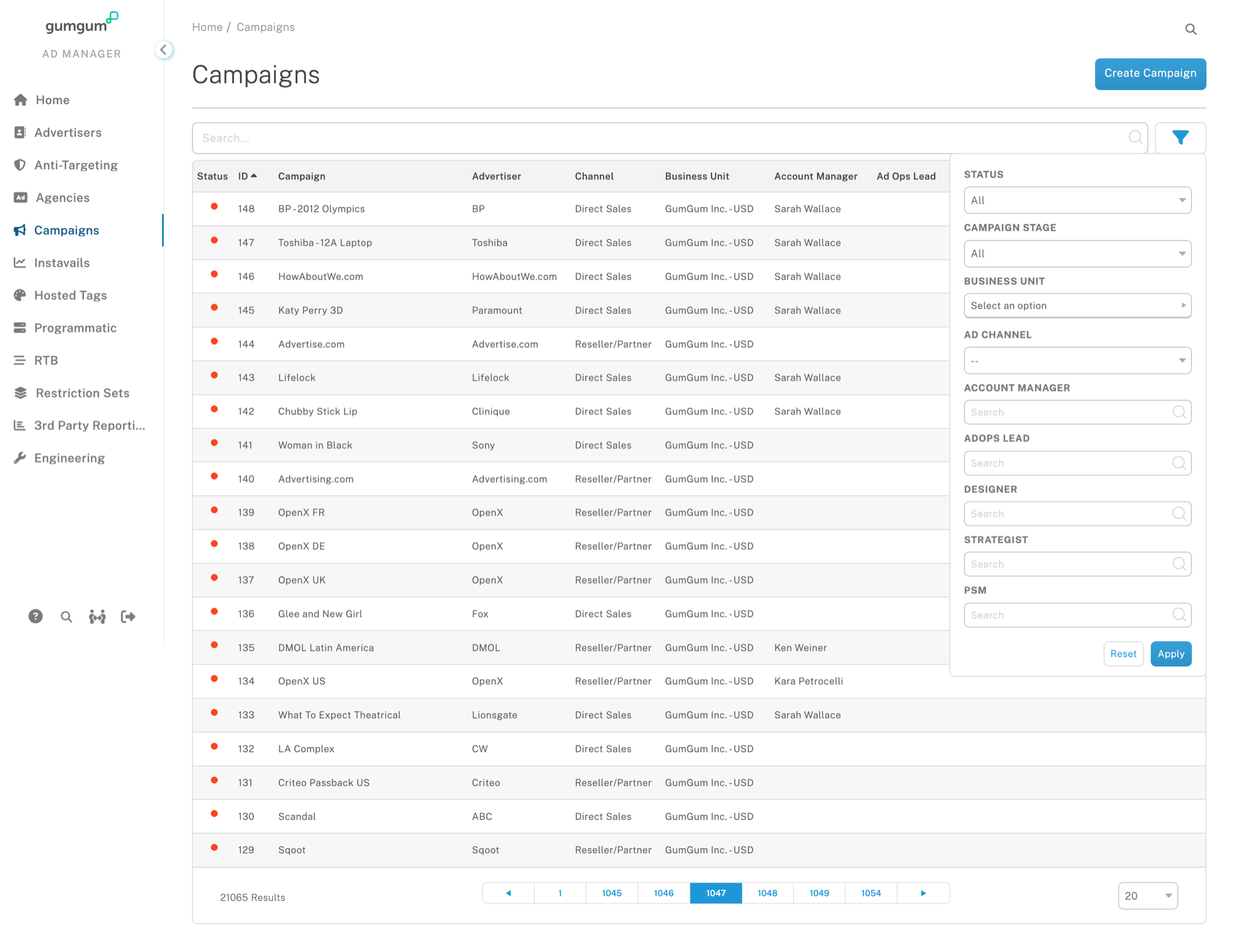
Ad Manager made the money, and it ran on a 2008 stack buried in tech debt. Four sibling enterprise apps and five smaller tools shared its data, each with its own UX. A company rebrand was landing at the same time, and backend changes were limited.
> WHAT I DID
- Ran the account managers', ad ops and sales workflows end to end myself before designing anything.
- Printed every screen, put it on a wall, and audited it with the team.
- Standardized tables, filtering and industry terminology across every app.
- Shipped Concrete 2.0 as a versioned NPM package, so a version bump did the migration.

> WHAT CHANGED
- Six themes became one.
- Enough manual work came out of the ops workflows that they needed fewer people to run.
- Fewer API calls and duplicate data entry points.
- Engineers learn one set of table, filter and form patterns instead of six.